


Good evening StockBandits!
Wednesday’s post-FOMC selloff erased the day’s solid early gains, giving the appearance that the bounce on the daily charts of the indexes was already failing. However, the buyers were back in form today, quickly reclaiming yesterday’s highs and easily pushing back through them as the market tacked on 2%.
The back-and-forth volatility is a welcomed change for traders, particularly on an intraday basis, but there are some mixed signals on the daily charts tonight which are keeping the picture a bit foggy. Tomorrow morning we have the economic situation which could easily spark another opening gap in either direction, making it a tricky spot to try to get positioned very heavily on either side of the tape right now. It’s a time when a stick-and-move approach is likely best, so I’m planning on keeping my timeframes brief as we head into Friday.
Here is tonight’s video:

The Bandit Broadcast Video – Click to Watch!
–
Video Stocks Discussed: SWK, PODD, GOL, HGSI, AONE, APOL, FSLR, AEM
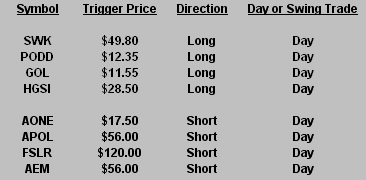
Swing Trading Candidates:
NONE TONIGHT
Bullish Watch:
CAT, TNB, GY, SWK, PODD, GOL, GAP, CFN, PRGO, HGSI
Bearish Watch:
AONE, APOL, LTD, CLI, ALTR, FSLR, AEM, PSYS
The Hit List will be coming out soon with discussion on open positions and swing trade stops and targets, so be sure to watch for it.



I shorted APOL on Friday at $56.00, didn’t manage to close the position before the end of the day, and then managed to close it with a limit order at break even this morning 1 minute after the open.
I was anxious to close the position due to how the market outlook and futures stood.
In hindsight I wish I had given it 20-30 cents of breathing room, as it broke down 5 minuteshould have and have dropped to $53.85 already.
But before the open, those 20-30 cents seemed like cash out the window to me.
Hey Kim,
Thanks for sharing this. It can be one of the most frustrating things in trading to get spooked out of a good trade only to see it go your direction soon after. I have been there plenty of times, and that is part of trading.
I think what is most important is that we decide on each trade how we’ll treat it. For example…
Some trades might be initiated (and therefore managed) according to what “the market” is doing. So if the market is strong, we buy in expectation of some upside participation. If the market doesn’t continue higher, we exit the trade.
Other trades might be set-it-and-forget-it trades, whereby we designate entry, stop and target levels and allow the stock (and the market) to fluctuate however it needs until our thresholds are met for the stop or target levels.
Going forward, it may help if you determine which trades you’ll observe the market for, and which ones you’ll simply look at the individual chart. Your preference might be to do all trades in the same manner, which is fine. My point is that making that decision will add consistency to your process and help you to know which trades simply didn’t work out and which ones you may have over-managed.
Hang in there!