


Formerly referred to as the Trade of the Week, this is the first post in what will now be known as the category called “Trading Lessons.” This will be a regular feature here in The Bandit Hideout where we take a look back at a trade and see what we can learn from it. It might occur weekly, or more or less often, and it may be written or video format.
It might have been a winner which paid us nicely, and we’ll want to know what it was about that play that worked so well for us. Or it might be a trade which performed poorly for us, thereby offering us another valuable lesson which we might can apply going forward.
Whatever it is, the aim is to use the old ‘hindsight is 20/20’ adage to our advantage. We can learn a lot from the past! There’s no reason to ignore it when it can help us improve as traders.
Trading Lesson for 10-17-2009:
This past week, I liked how SNDK was acting. The stock had already carved out one short-term lower high, made new pullback lows, and bounced to what appeared to be a potential 2nd lower high since the September peak. The bounce had stalled out, and the risk/reward looked favorable for a trade on the short side. Here’s the chart I highlighted with the play:
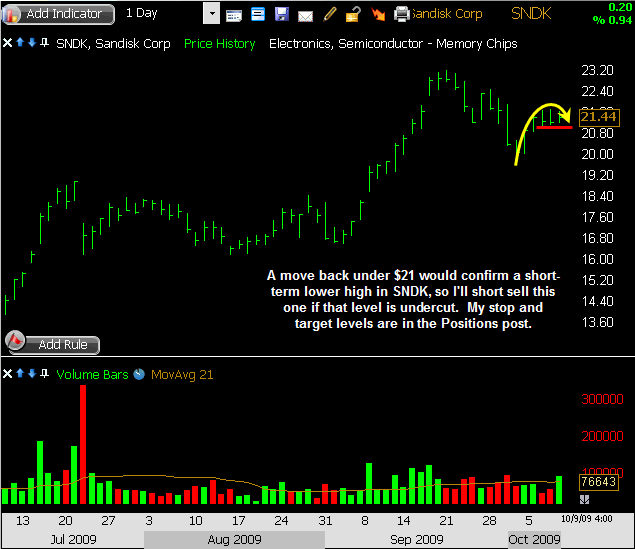
I took the entry as SNDK undercut the $21 level on Monday and began to head lower, but it was reluctant to really let go and ultimately bounced to finish well off its session low. On Tuesday, it bounced slightly, finishing slightly above my trigger price and back above $21.
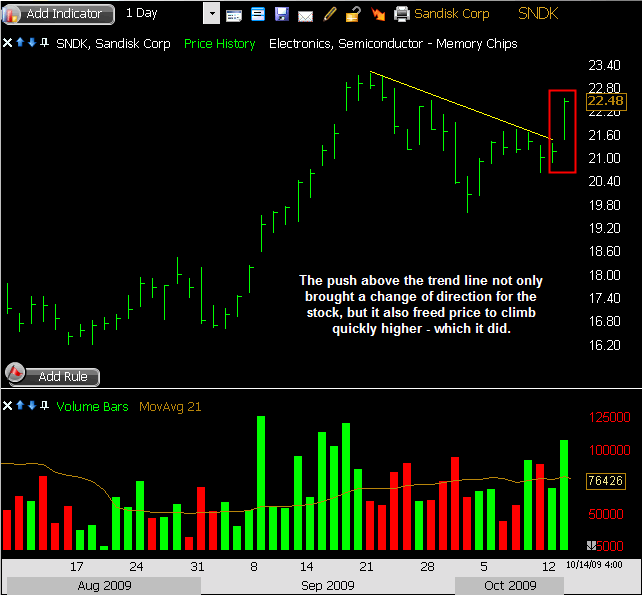
This gave it the feeling of a potential head-fake move, which raised my caution. That evening I also noticed the stock had developed a descending trend line off the highs, which previously had not been present. This now offered potential buyers a pivot for going long, which would mean pain if SNDK cleared that trend line since it could easily spike higher.
So with a tightened stop, I waited to see what Wednesday would bring. SNDK opened higher, pushing north of the trend line and surging higher on the day. I was stopped out for a loss, but felt great about the damage control for a failed trade. Here’s what the chart looked like after Wednesday’s move:
Looking back, I wouldn’t have changed my game plan. The best trades may be profitable, but that doesn’t mean that a losing trade isn’t a good trade. In this case, I identified a good pattern which had a nice risk/reward associated with it. I followed my game plan, and even made a necessary adjustment along the way when I tightened my stop after the initial attempt to roll over showed some hesitation.
So this week’s trading lesson is this: don’t beat yourself up over a failed trade. They are going to happen, and losing is part of trading. The key is losing small and sticking with your discipline. Good discipline means getting out when it’s time, yes, but it also means putting on the trades you’ve found which meet your criteria for entry. From there, it becomes a numbers game.



Great lesson Jeff. Unlike some other sites on the web, you review losing trades as well as winners for valuable lessons learned.
Thanks Gary, that means a lot. Transparency is critical in running a site like this, and that means open admission to losses. Plus, we can truly learn a lot from trades which don’t work out. We’ve paid the tuition, might as well take the lesson along with it, right?!
Jeff
Jeff…..nice discussion. As you know from my past comments, I think that one of the most valuable things we all get from you (and each other) is post trade analysis of trade management. And often the so called “mistakes” or losses are much more valuable for learning than the wins.
I agree Jon, we stand to learn so much from looking at what has just happened in trades and seeing what we can take from it. It’s amazing once our emotions and biases are removed (aka, no position) how clearly we can see our mistakes!
Jeff
Lately I’ve been doing intraday trading of the leveraged ETF’s again. They are nice (for me) on days when we have the morning spurts (up or down) and then chop, since they work for scalping at both times (though with different trade parameters). In the spring I had a long discussion on my blog about BAD trade management on one such trade. In the spirit of sharing, here is the link for anyone who is interested.
https://at-stk.blogspot.com/2009/04/dumb-move-and-componding.html
And another one about the real effect of managing losses.
https://at-stk.blogspot.com/2009/05/reflections-on-managing-losses.html
Good stuff Jon, thank you for sharing this.
Mistakes we make will at times be mechanical or technical (order errors, failure to notice certain chart developments, etc.), and at other times they’ll be mental (a directional bias we refuse to release, or allowing emotions to interfere with our better judgment). It’s best to include them both anytime we’re reviewing our trades, and you did that quite well in your post.
Jeff