TheStockBandit.com

Swing Trading and momentum investing stock pick newsletter and swing trading service.

  • Home
    • Blog Archives
    • Blog Categories
  • About
    • About The Stock Bandit
    • FAQ
    • Contact Us
  • Strategy
    • Join the Email List!
    • Stock Trading Methodology
    • Trading Rules
    • Chart Patterns
  • Products
    • Products Overview
    • Trading Courses
    • Stock Pick Service
    • Recent Trades
    • Trader Coaching
    • Seminar DVD’s
  • Subscription Info

Wait for the Trend Line Break!

April 11, 2012 By Jeff White Filed Under: Trader Development

As a pattern-based trader, I use a lot of trend lines on my charts. When you look at my charts, the only indicator you’ll see is the 21-period MA of volume, which is the running 1-month volume average. Beyond that, it’s just price, volume, and trend lines around the patterns I see in price.

I keep it simple.

Confirmation of those patterns is what I require before taking entries on 99% of my trades, which means price crossing through a trend line. The way I view it, until that line in the sand is crossed, nothing has changed. The rest phase or pullback must not be done until then. I may detect price perking up or volume percolating, but until the trend line breaks, the setup cannot be fully embraced as a positive change of character.

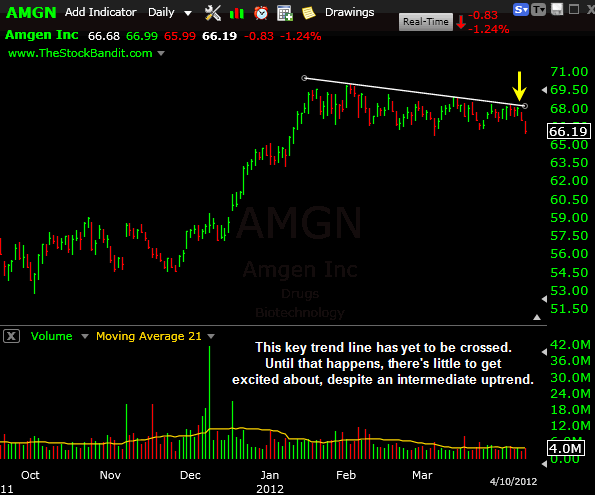
Right now there’s an excellent example in the chart of AMGN of why waiting for that trend line break can mean preserving both capital and clarity. The stock is bullish, no doubt about it, as the intermediate uptrend remains intact since it began last August. Since then, we have a series of higher highs and higher lows.

In recent weeks, the stock has been pulling back quietly with some minor profit-taking leaving price drifting lower since the early-February peak. The prior breakout was around $65 (January) so it could be the stock is in for a test of that zone, who is to say otherwise? And until a break occurs to suggest the stock is back on the move, who cares?

Currently, the stock is floundering around beneath a very valid trend line, but no less a trend line which has yet to be crossed.
Why I Use TeleChart

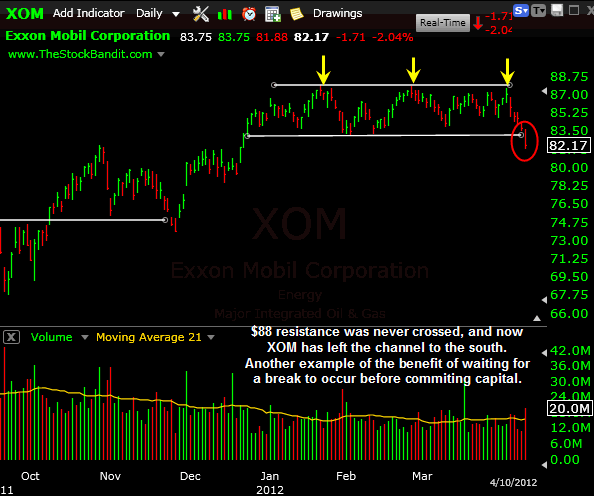
XOM is another example here as just recently the widely-anticipated push through the $88 level as recently as last week never happened. The stock has since fallen out of its channel to the downside. Waiting was the best option.
Why I Use TeleChart

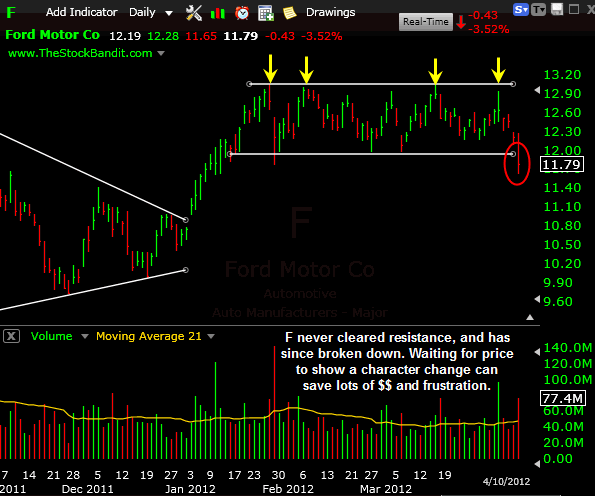
F is one more on the list with $13.05 resistance never being crossed, despite approaching it multiple times of late. Those who bought early in hopes of getting in “cheaper” ahead of the breakout actually paid up. The stock has exited its trading range to the downside, leaving premature buyers in what I’d call the “hurtin for certain” department.
Why I Use TeleChart

Traders by and large love to predict what’s coming, and often will take anticipatory trades as such. Doing so can be an expensive way to get caught in a stagnant name.

Carefully consider whether a stock is truly getting on the move before committing capital to entries. Could be that waiting a little longer provides you with not only better prices, but better defined exits as well.
Trade Like a Bandit!

Jeff

Yard Crew Traders – When The Bell Rings 2

April 10, 2012 By Jeff White Filed Under: Trader Development

Today, I bring you Episode 2 of When The Bell Rings.


Hopefully you caught Episode 1 last week which lays the groundwork for where this series gets its name. If not, check it out first!

In this episode, we’re talking about something which many traders fall into the habit of doing, but fail to recognize it until it’s too late.

Once that happens, they tend to just accept it even though it leaves them at a huge disadvantage.

I hope you get a lot out of this second installment. Watch for more in the days ahead, and of course if you find these helpful, then let me know!

Trade Like a Bandit!

Jeff

Win More by Risking Less

April 5, 2012 By Jeff White Filed Under: Trader Development

Each of us understands that we have to take some risks to get paid, but for most traders, improvement lies in taking the right kinds of risks.

Recently I sat down with Tim Bourquin for a MoneyShow Interview, and we discussed this topic of how to Win More by Risking Less. The clip is 3 minutes and can be viewed here.

In the segment, we discuss the mentality traders should bring to trading, the importance of knowing your exit, risk/reward ratios, and position sizing. We also discuss the often misleading notion of accuracy in trading and what that should be replaced with.

(Another 3-minute video from this same interview discusses The Trade Plan that Works For Me, which you may also enjoy.)

Trade Like a Bandit!

Jeff

Think Like a Poker Pro

April 4, 2012 By Jeff White Filed Under: Trader Development

I love the movie Rounders, in which Matt Damon is a poker player looking for a big break (and then a way to get out of some serious trouble).
In the movie, his character Mike McDermott makes a comment early on that as a player, “your goal is to win one big bet an hour – that’s it.”

Notice he said “win one big bet” rather than “place one big bet.” There’s a key distinction here and it applies to trading.

Amateur Hour

Amateurs too often think they need to place some big bets in order to win big. They couldn’t be farther from the truth.

Amateurs are also generally too proud to fold. That’s admitting defeat, and rather than seeing the bigger picture of losing some battles in order to win the war, they take a stand when they shouldn’t – and they pay for it.

How the Pro’s Play

Professional traders, on the other hand, realize there’s plenty of quiet time to endure before those payout opportunities occur. They realize it’s a matter of hanging around, staying in the game, in order to be fit to capitalize on the best “hands” they are dealt.

Professionals understand that taking small hit after small hit is easily undone by just a win or two – so long as they’re losing smaller and winning bigger. Be willing to fold repeatedly if necessary – the goal is to be net profitable, but that won’t happen every single time you commit your capital.

Trading is a numbers game, and professionals only play (or play for meaningful stakes) when conditions are most favorable. Very simple, but very difficult for many amateurs to do.

So the question is… are you thinking (and acting) more like an amateur or a pro?
(Hint: your results are likely already reflecting it.)

Trade Like a Bandit!

Jeff

When The Bell Rings – Episode 1

April 2, 2012 By Jeff White Filed Under: Trader Development

All the videos I’ve been doing here have been in screencast style as I narrate what’s on my charts and share insights with you. Those will continue, because certain things in trading must be illustrated in that manner in order to show you what I’m telling you.

But…

It’s time to put a little different spin on things and I felt that through some on camera face time, I’d be able to connect with you a little better and deliver some ideas and concepts that you absolutely MUST have as a trader.

So today, I bring you something I’ve been excited about lately but haven’t previously revealed with this new video series.

I’m calling it When The Bell Rings, and here in Episode 1 I’ll explain why. Subsequent episodes will of course build on what’s delivered here, so by all means stay tuned and share your feedback if you’re finding these helpful.

Enjoy!

Trade Like a Bandit!

Jeff

The Self-Education of a Speculator

March 20, 2012 By Jeff White Filed Under: Trader Development

As a full-time trader, I don’t have a typical job. I have a 5-second commute to my home office. I wear t-shirts to work! There is no boss standing over my shoulder, and the actual trading hours require a relatively brief daily commitment (6.5 hours) as compared to other occupations. And I’m thankful for all of it.

trader-educationThe market closes at 3pm for me, offering lots of time to tend to other things – if I so desire. However, my desire is to succeed at trading for the long haul, which means I have lofty goals. In turn, I’m not the type to walk away when the closing bell rings. I work at it every day to improve and educate myself on an ongoing basis. I have to stay sharp.
That means I’m reading books, blogs, spending considerable time working the charts in search of what’s working best right now, and of course reviewing my own trades in order to continue learning.

Because successful trading is so much about finding a style that fits your own personality, it is only fitting to investigate what styles exist. An energetic and impatient person may want to become a scalper, looking to day trade quick moves within a short timeframe. A laid-back trader may prefer a less-intense style like swing trading, taking positions to hold for days or weeks. There are many approaches to the market, and finding your own style can come as a result of identifying with the style of another trader.

Raising Your Awareness

The road to expertise isn’t a short one, particularly in trading. I’ve been at this long enough to be considered an expert, yet there are still plenty of days where I’m reminded that I sure don’t know it all! Trading will humble you like that, but that’s part of it. Regardless, here are some ways for you to get educated as you further not only your knowledge but your trading career in the process.

Books.

I’ve read a couple hundred of them on trading, and while there’s plenty of worthless paper out there, you can still find some great ones with timeless lessons. I think it’s important to continually seek out information, whether it’s new and applicable now or just a lesson to be reminded of (before the market does it for me!). Your self-motivation will help you improve, so dig through the classics for starters. Mark up the margins, underline the parts which resonate with you, and return to them often.

I particularly like the Market Wizards books by Jack Schwager. He profiles traders in all kinds of markets (bonds, equities, options, futures, mutual funds) and of all timeframes. Yet despite their differences, all are highly successful. The interview format he utilizes gets you in the minds of these great traders, offering countless lessons. (I regularly visit TraderInterviews for the exact same reason). Every good trader trades in accordance with their personality, as we all should.

The newest book I would highly suggest is One Good Trade, which is the best trading book I’ve read in a long time. Bella covers it all and overlays his lessons with a variety of trading characters (based on real people), which helps drive the lessons home that trading is all about performance, adaptation, learning, and having the right mentality. Once I started it, I couldn’t set it down, and I’ve re-read it since.

Blogs.

Reading posts like this one can’t help but to expand your knowledge and open your mind up to some new possibilities. There are countless blogs on trading, but there are some good ones. Hunt for those which offer whatever it is you’re lacking….encouragement, psychological lessons, trade reviews, sector snapshots, news on industry developments, interviews, trading videos, etc.

If you’re willing to get honest with yourself and figure out what you’re lacking, you can find some blogs to visit regularly as resources. Just be sure they’re written by traders, honest, and not wasting your time, as there’s no shortage of distractions out there that won’t help you grow at all.

Results.

If you don’t track your own trades, start yesterday! You can record your trading via screen-capture software, but even a journal or simply a grid outlining entries, exits, holding times, patterns, trade context and objectives will shed more light on your trading than you can imagine. As you collect results, start to compile them. I did this for the first few years of my trading, until I really understood what I was doing, and it helped me assess my strengths and weaknesses. Monthly, I’d review my results and calculate statistics which gave me plenty to work on.

You just can’t argue with data! Getting mixed results? It may be time to make an adjustment. Figure out how your wins and losses stack up against each other, as that’s a great starting point. Over time as you endure periods of profits and pain, you have stats to compare against and you can more readily see when something is out of line.

Premium Services.

I’d be leaving a huge part of the mix out if I ignored premium services in the education process. Early on, I subscribed to a number of sites while I figured out my own style. Once I got to the point where I had my own opinion, I knew I had learned enough to need them no more.

Here at TheStockBandit, we offer the nightly Broadcast with my trading plan for tomorrow, but it doesn’t end there.

We also offer stock trading courses in a video-on-demand format. The trading courses explain everything I know about trading, making them an incredibly valuable resource to return to over and over (depending upon current conditions in the market), helping traders see a huge variety of trade types and which kinds of market conditions are well-suited to those plays.  Many of you have enrolled previously and know the advantages you now have vs. before you took the courses.

If you want to accelerate your learning curve and truly build your skill set, let someone help you who has done it.

You Get What You Give

If trading is your job or a part-time endeavor you’re passionate about, recognize that your level of effort in the growth process is going to be reflected in the results you get. Be willing to apply yourself regularly as you learn more about not only the market, but yourself.

Staying educated and keeping a learning mindset is going to eliminate mistakes as well as some big disadvantages you currently face if you’re halfway new at this. As you make that a habit over time, it’s going to continue to pay off in a number of ways. Become a complete trader and commit to educating yourself. You won’t regret it.

Trade Like a Bandit!

Jeff

Watch for this Pattern

March 5, 2012 By Jeff White Filed Under: Chart Reviews, Trader Development

**I was asked to write an article for Active Trader Magazine, and I submitted the article below this week for an upcoming issue.  I couldn’t imagine not sharing it with Bandits first though, so here you go!

Trading the Slingshot

For some strange reason as a kid, I collected a variety of unusual weapons ranging from butterfly knives to Chinese stars to a blow dart gun. However, my favorite was the arm-braced aluminum slingshot with the medical rubber tubing and leather pouch. When exploring the outdoors with my friends, I just knew I was prepared for any critter threat which might possibly come along.

Trading is much the same way in that we must be prepared for anything. The market presents many dangers and opportunities for us, so when we’re exploring ideas among the charts, it’s imperative that we’re equipped with some quality trading weapons.

A setup I’ve discovered recently is one I’ve dubbed “The Slingshot.” It’s a hybrid version of the rounded low pattern, but rather than the gradual reversal which tends to emerge from saucer-like lows, the Slingshot has potential for some explosive upside moves when certain conditions are present. So in this article, we’ll examine the traits which set this pattern apart.

Roots in the Rounded Low

Technical patterns often resemble each other, and that’s the case with “The Slingshot” as compared to the Rounded Low. They do retain their own traits, however, so I’ll clarify the distinctions between them.

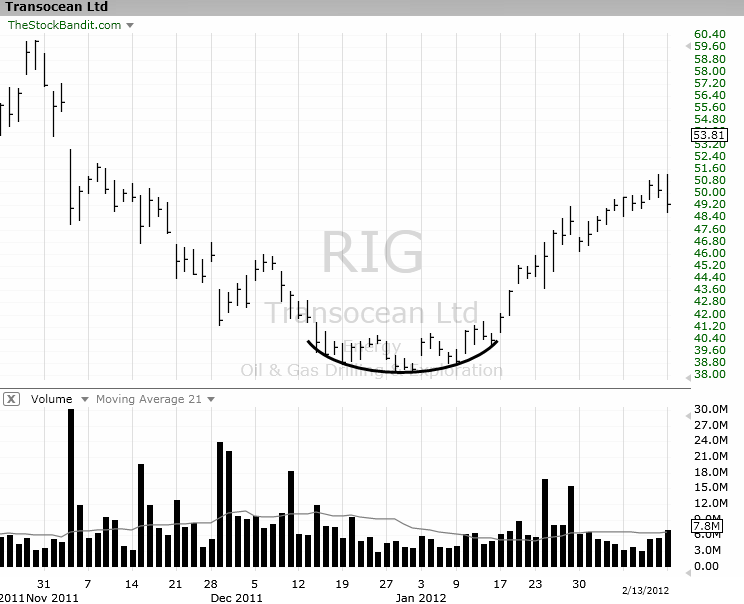
A steady decline in RIG was followed by a slow shift of direction with the gradual creation of a multi-week rounded low into early 2012. This pattern produced an upside reversal, but it's a longer-term type of play as compared to The Slingshot.

The Rounded Low, or Saucer pattern represents a slow shift of direction from down to up. Generally, these patterns emerge after a meaningful correction (see RIG chart for Rounded Low example). The pace of the decline in price steadily slows to equilibrium, creating the left and center portions of the pattern as sellers gradually exhaust themselves and recognize (at least temporarily) that the correction has ended.

As buyers timidly enter the picture again, the right portion of the pattern mirrors the left with a gradual lift in price. Once completed, this pattern represents a half-circle, although usually flatter in appearance – much like a saucer. Price has slowly turned higher after the selloff, and upside momentum becomes a possibility again. The shift of direction in price reflects the mood shift which is also underway, changing the path of least resistance from down to up.

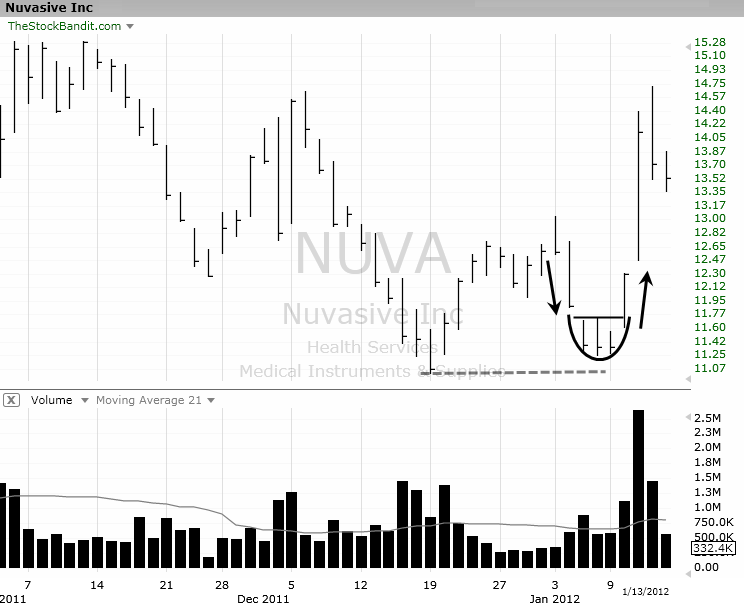
“The Slingshot” could be considered a relative of the Rounded Low. Think of it as a younger, faster-moving, and more temperamental version of the rounded low as we get into this explanation. It’s essentially a compressed version of the saucer, meaning it happens in less time and with stronger emotions, but generates a similar rounded appearance over the course of several bars on the chart.

A multi-day selloff was met with a few days of indecision in late-December. A push through resistance at $13.10 produced some initial strength, a brief test two days later, then excellent follow through.

Referring to it as “The Slingshot” only makes sense. When you think of stretching back the bands of a slingshot, they tend to stop at a point where they just can’t give much more before snapping back. Pulling back the pouch, you hold it momentarily before letting it go, which of course brings about a shift of direction for the object.

This is that kind of trade.

“The Slingshot” setup is found in a stock which has swiftly declined to the point at which it has become short-term stretched. That move is then followed by a brief pause of perhaps only a couple of bars, which then opens the door for a potential snap-back move to the upside. This play produces a faster 180-degree reversal than the saucer pattern, making it more of a momentum trader’s type of setup.

Psychology in Motion

The element of emotions and psychology are what tend to make “The Slingshot” pattern so appealing. Specifically, it’s the presence of fear in all who are involved during the latter part of this play which gives it such potential for a sharp rebound. Let’s examine the thought process of both bulls and bears along the way for greater insight.

The bulls are long, so a swift decline in price alerts them to danger. Whether it’s open profits they are giving back or simply seeing losses mount, the result is the same: fear. This spooks holders of the stock out of their positions, thereby accelerating the pace of the selling.

The mid-summer decline was harsh, but the stock was able to rest for a week, creating both a defined short-term resistance level as a pivot to buy and a rounded look. A multi-day high provided the pivot for entry at $14.90.

The bears identify the pervasive weakness and aggressively short the stock, sensing opportunity to snag some quick gains. Their profits grow rapidly until the pace of the move slows, which puts them on alert for a potential bounce or reversal.

Both camps to this point have been sellers, which produces the momentum for the swift decline we’re looking for.

As equilibrium is found and the selloff abates, both parties begin to second-guess their recent sales. Bears are now apt to cover their shorts whenever some strength appears, fearful that they’ll surrender easy profits if they overstay their welcome. Alternately, the same bulls who previously jumped ship on the way down are now fearful of missing the boat if the correction is over, so they begin to sense an opportunity to get back in.

This combination of bulls and bears becoming buyers, at least temporarily, is what can produce the rapid shift of direction for higher prices. It’s an emotional trade which is intensified by the tendency of both bulls and bears to take the same actions at the same time – something we don’t see often.

The Specifics of the Play

Now that we have a more thorough understanding of what the play involves and what tends to make it work so well, let’s get more specific. We’ll examine each of the characteristics of the setup in order to identify it properly and execute it with a higher probability of success.

Several days of selling resulted in price finishing for three consecutive days in the same area, showing equilibrium between buyers and sellers. As price reversed higher to make a multi-day high through $11.80, volume ramped higher and a rapid ascent in price followed.

While this play can be applied to any timeframe, I’ll use daily charts as examples for the sake of consistency throughout this explanation.

Decline. The selloff which creates the first portion of this setup occurs over the course of multiple bars. What we want to watch for are several days of actual selling, not just a big single-day decline or a big gap lower. There must be some emotion involved here which has the bulls on the run, and their disappointment is more prevalent when they’ve endured several days of nonstop selling. The decline must also be relentless, which is to say there are no bounces or advances during the down move – we want to see red bar after red bar as this play begins to set up.

Generally, I’m looking for at least a 3-day selloff with price shedding 8% or more. A longer-lasting decline with a deeper discount in price simply means greater emotion, but that’s my minimum. It’s perfectly fine if this setup corresponds with a multi-day market pullback as well, because the psychology will still be the same.

Rest. A pause in price is every bit as important as the nature of the decline which precedes it. We want to see the emotional selling followed immediately by a standstill as neither bulls nor bears know what to do next. This rest phase may only last from two to five bars – so it’s brief – but it’s a critical element of this setup. It indicates to us that now that emotions have diminished, temporarily, and opens the door for a shift of direction.

Reversal. Once the pause has completed, a multi-day high is the signal that price is reversing higher to clear the area on the chart where the rest phase occurred. This indicates that the shift of emotion and price is underway as the stock begins to retrace its recent descent.

Direction. “The Slingshot” is a long-only play for me. The reason for this is that stocks which have sold off sharply tend to produce more panic and emotion than stocks which have risen sharply. Stated otherwise, a sharp rally and then pause in price doesn’t tend to produce the downside reversal as often because different emotions are prevalent.

The rally-and-pause move promotes greed, as bears generally respect the strength and bulls desire to add to positions. The combination of selling by both parties after a big advance simply doesn’t often materialize when this is the case.

The decline-and-pause move, on the other hand, prompts two kinds of fear. The first is in bears who fear getting hurt on their short positions once the bounce begins, which makes them buyers. The second is in the bulls who fear missing the turn back up after dumping their positions on the way down. This produces simultaneous buying pressure, which is capable of making this a very lucrative play.

Execution. Entering “The Slingshot” is simple, but not always easy! The presence of emotion makes this a more volatile play, which can often mean a reduced position size is required in order to stay with the trade. I look to make my entry upon the establishment of a multi-day high as the rest phase is followed by initial strength. This is not an anticipatory entry, as I’m not buying within the rest phase. What I want to see is some strength emerging, which then prompts me to take action and buy. This is highly important, as a selloff followed by a rest phase can often bring downside continuation, so premature buys will often be costly.

That said, as price advances through multi-day resistance, it’s my signal that the retracement is beginning, so it’s time to buy. Ideally, I’m able to draw a lateral trend line to define that resistance zone, as depicted in the accompanying example charts. Trend lines help me be decisive, and offer me a timing mechanism for when to take action. As that level is crossed, I use a market buy order to get long, as I would rather catch the move and possibly pay up a few cents from my intended entry than to miss the play entirely. I then set a stop loss at a multi-day low, should the stock happen to turn lower once again. This protects my downside, giving me a well-defined risk zone from the outset of the trade.

Objective. While some “Slingshot” plays result in a complete retracement of the initial decline, that cannot be expected in every case. I am looking for a multi-day advance, but how long I’ll stay with the trade is going to depend on the presence of momentum. No two trades are exactly alike.

As price begins to gather momentum, I’ll look to scale out with partial exits, as is my trading style. Generally, I’ll look for a rebound in price beyond the trend line to reclaim at least half of what was given back in the initial decline before closing out part of my position. This allows me to book some gains along the way and make them real, while staying with a portion of my position should the move happen to continue. Once that objective is met, I’ll reduce my position, tighten my stop, and then manually trail my stop nightly to the prior day’s low in order to capture as much of the move as I can.

Final Reminders

We’ve covered a lot of ground with “The Slingshot” pattern, but allow me to offer a couple of final reminders as you head to the charts in search of this play.

First, this is not a pattern likely to be found every day, so consider it to be one play in your arsenal. The market demands that we’re prepared and equipped to utilize a variety of plays, so naturally we must be willing and able to modify our approach based upon the general conditions which are present at any given time. “The Slingshot” is more rare than many types of plays, which is one reason it has the potential to be so rewarding.

Second, trading “The Slingshot” isn’t about stepping out in front of excessive weakness and buying arbitrarily in hopes of catching a rebound. Truth be told, that’s a great way to self-destruct. Rather, “The Slingshot” is about waiting for price to pause after a big decline and meet some temporary point of equilibrium. Then the signal to act comes once the tide begins to shift with a turn higher.

“The Slingshot” setup not only offers us an up-close look at the emotions which are present in the market, but also a short-term opportunity to capitalize on those same emotions. Learn this play and watch for it, as it’s a great addition to the classical patterns you may already be trading.

Trade Like A Bandit!

Jeff

How Long are Levels Valid?

February 29, 2012 By Jeff White Filed Under: Trader Development

A Bandit recently asked me about levels and how long they should be watched. This was a great question, so I wanted to be sure to share this exchange with you.

Question:
Jeff, I’m new to trading (since Christmas). I’m wondering how important long term resistance levels are. I suppose it depends really on the market conditions. A skittish market probably respects them more. This market seems to be plowing on through them regardless. The NASDAQ now, is free and clear of them with its breaking through the eleven year high, unless it goes down again.

The reason I am asking is that I’m sticking to a 4 1/2 month chart and ignoring any information older than that. It simplifies things and I wonder how far back people really remember. I also am thinking the older the resistance/support level, the less significant it is. Do you think I will be ignoring less recent history at my peril? I also find that the more information I bombard myself with the less clarity I have.
Thanks

Answer:
Great question and this really deserves its own blog post so I’m glad you asked. To answer you though, here’s my take on it.

I’ll begin by saying as long as a level is being respected, it’s worth taking note of. That pertains to an individual stock which keeps knocking on the door over the past few weeks, or to an index chart like the NAZ which has just recently pushed through multi-year resistance.

So, they’re worth taking note of. As far as how important they are, let’s consider the psychology at work here, which is what it really comes down to.

Technical levels are representations of buyers and sellers, which often times base their decisions on emotions. The older the level, the less emotional significance I’d attach to it. More recent levels are fresher in terms of emotion, and therefore tend to get respected to a greater degree.

I’d say anything inside 18 months or so is game, whereas I place lower significance on multi-year levels. They may be noticed by technicians, but anyone who has held for 11yrs in the case of the NAZ isn’t likely to bail out now that they’ve finally gotten their money back – I think they’re the “invested” crowd who never truly intends to sell.

What do you guys think? What would you tell this new trader?

Trade Like a Bandit!

Jeff

5 Takeaways from the NYC Traders Expo

February 23, 2012 By Jeff White Filed Under: Trader Development

Last night I returned from my trip to the NYC Traders Expo. It was a great experience. Visiting the city itself with some great February weather and seeing all the famous landmarks was nice, but I really enjoyed spending time with some Bandits while there – those of you I saw, thanks!  Also got to spend time with a number of other trading friends I’ve made over the years from different parts of the country that I just don’t see often.

In addition, I was fortunate to speak to groups of traders twice while there, which was both challenging and insightful as I prepared ahead of time then fielded some well-thought-out questions from attendees. It was really fun!

There’s an energy when traders collect which is always motivating. From the trading floor I first participated on back in 2000, to times in Chicago seeing everyone file into the CME ahead of the day’s session, there’s just something that happens when traders gather to compete or exchange ideas – I love the atmosphere.

A few thoughts on what I witnessed, in no particular order…

Hunt for the magic bullet. There are a TON of traders who show up just wanting the latest lure to fish with. They aren’t willing to put in the work, to learn to think for themselves, or to understand what it takes to become successful as a trader. They want the overnight shortcut, and they exit the scene just as quickly as they arrive, disappointed and surprised that trading isn’t red and green infomercial-easy.

Trading is a process. I’ve known this, but was reminded of it through my preparations for speaking and in conversations with other traders. Trading requires adaptation, a willingness to lose regularly. Imperfection is to be expected, and so it all becomes about good management of trades rather than finding the can’t-miss sure thing. What works now may not work in a few weeks, so you have to be willing, able, and prepared to shift your approach. The market evolves, and so must you if you want to stay in the game and keep seeing opportunities.

Expectations. Expect some losing trades (and learn to manage them wisely). Expect periods of frustration and confusion, they’re going to happen. Expect the market to surprise you – it’s just that way, so you’ll have to be ready to respond accordingly. Times will come when you have no clue what’s next, but that’s OK. When they arrive, you can accept them and sideline yourself until clarity comes.

Hard work is rewarded. I saw Expo attendees show up early and stay late, attending multiple sessions, taking notes on the good things they heard, and leave tired but hopeful that some fresh perspectives will influence them to improvement in the days ahead. I saw prop traders from SMB who started their day extremely early, made the commute to lower Manhattan, gave it their best all day (though some admitted it was a tough day), then stuck around after the close to listen to my thoughts. Even after I was done presenting, they showed the discipline and desire to improve by asking questions, just absorbing knowledge even though they were tired and hungry and eager to call it a day. Those who work hard – even when it isn’t comfortable – are the ones who will make it, keep improving, and eventually see the fruits of their labor.

Trading is a battle. What’s interesting – and which few stop to recognize – is that only part of the battle is in the market. The rest usually happens internally. So be ready, you’ll need to bring your best if you want to compete in this game. You need to prepare a plan, and think through the emotions you might face while implementing it. Regardless of style, strategy, market, or timeframe, every great trader has his head on straight. Those who don’t will have it beaten to a pulp by a ruthless market.

If you were there, or if these have resonated with you, feel free to share some thoughts of your own.

Trade Like a Bandit!

Jeff

Why Anticipatory Trading is so Tricky

February 3, 2012 By Jeff White Filed Under: Trader Development

Charts give us the opportunity to wait for confirmation or enter ahead of time – to anticipate. And while the latter may give us more of a feeling of being right, it’s not an easy way to trade.

Here’s an example from this week…

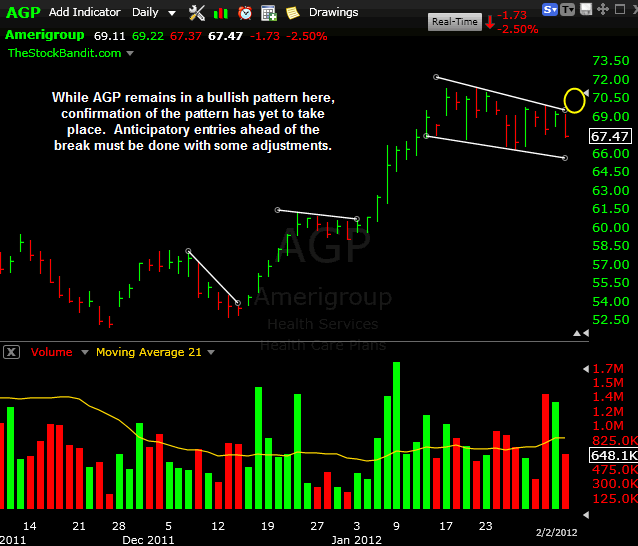
AGP is sitting in a bullish consolidation pattern here within an existing uptrend. This is a quality pattern – but it has yet to confirm. A breakout would happen beyond the upper channel trend line, currently at $70. Check out the setup, then down below let’s discuss trading it.

Why I Use TeleChart

This is a setup which would have delivered some frustration for those anticipating a breakout – at least for those who entered early. Wednesday saw a move back up toward the upper channel line, suggesting a breakout was perhaps coming soon, only to have a decisive turn lower on Thursday bring it right back into the center of the channel. The stock is again lower this morning.

How Amateur Traders Anticipate

Many amateur traders make anticipatory trades. They receive a tip, or they have a hunch, or they just want to see their predictions proven, and they get in before any bit of a move has started. They load up, then wait to get paid. A failure of the stock to deliver the move results in the max loss possible under this circumstance, all because of how the amateur entered the trade.

How Professional Traders Anticipate

Many professional traders make anticipatory trades as well. Their experience provides them with market feel, and when watching the tape and eyeing the charts, they’ll run across trades they like too – maybe even the exact same setups as the amateur finds. However, their execution methods are worlds apart.

Rather than piling into the trade and sitting back and hoping the market proves them correct, the professional enters a feeler position – a starter. A trade small enough to watch but not big enough to hurt them or really help them. It’s a marker. As the trade begins to prove itself and the pattern starts to confirm, they add to the trade. They build a position as it works, allowing them to get paid nicely when their hunch proves correct. A failure of the stock to deliver the expected move results initially simply leaves them stopping out of their starter position for the bare minimum loss.

See the difference between the two?

There’s a big argument to be made for just waiting for confirmation in a pattern to take place before entering a trade, but anticipatory trading can still produce profits, so long as you’re doing it carefully.

For those of you anticipatory traders, the example above is a great example of how to finesse your entry. Scale in, make the setup confirm before adding, and know you’re covered either way – whether a tiny loss you can easily survive or a winning trade you can build on.

(For more on anticipatory trading, read When to Make Anticipatory Trades.)

Trade Like a Bandit!

Jeff

  • « Previous Page
  • 1
  • 2
  • 3
  • 4
  • Next Page »

Recommended Broker


Links

Terms of Service
Privacy Policy
Disclaimer
Site Map
Contact us

Follow


Premium Services

Stock Pick Service
Trading Courses
Trader Coaching

Copyright © 2026 TheStockBandit, Inc. · All Rights Reserved